Promising Pioneers
About Me
I am a Counseling Specialist with Upward Bound, a program designed to help first generation college students and students from disadvantaged backgrounds prepare for college and improve their chances of graduating in their post-secondary education programs. One of the objectives presented to us in improving our program was to evolve a supplementary program in the grant to include new objectives.

Supplementary Skills (Problem)
The objective of the changes from the previous program, Guidance Groups, was to alter the objective goal of the program to focus less on mental health soft skills awareness and more on personal and community growth mindsets.
Objective: Trauma-informed small-group activities that promote:
- Mindfulness
- Curiosity
- Empathy
- Compassion
- Active Listening
- Cultural Capital
- Social Capital
Context
When: Summer 2022 (Sundays of June); between 7 and 8:30pm.
Where: In Campus Dorms during a Summer Camp Program
How: Students were broken into groups lead by two residential staff members they were familiar with. Seven separate groups were between 14 and 16 students each and met with the same staff members all 4 sessions.
Participants/Students/Users
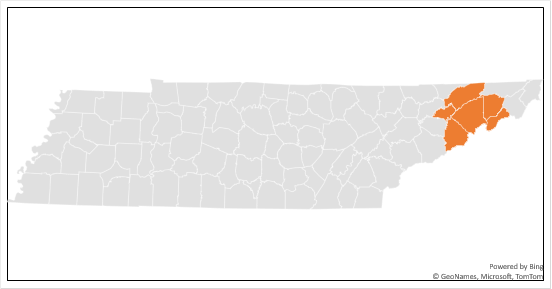
Students in the program are students at high schools in one of six counties local to the East Tennessee Mountain region. Ranging in age from 14 to 18, students attend a six-week summer program that has them attend college-style classes, participate in social experience activities with their peers, and live on an actual college campus to reduce the anxiety of the unknown involved with moving away for school.
Learning Objectives
Seven Points to Teach:
- Mindfulness — introspection
- Curiosity — inquisitiveness
- Empathy — sensitivity to others
- Compassion — desire to help others
- Active Listening — hearing and understanding
- Cultural Capital — resources gained through culture that promote social mobility within a societal system unrelated to economics
- Social Capital — resources gained through social relationships and networks
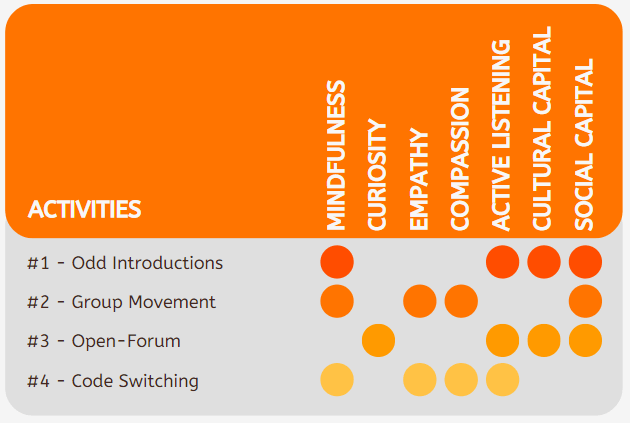
The Activities Created (Research)

Session #1
Odd Introductions
Students were asked to introduce themselves with a series of pre-established questions that ranged from emotionally deep to humorously absurd. After the icebreakers, students were introduced to the themes of social capital and cultural capital.
Session #2
Group Movement
Students were lined up side-by-side and introduced to concepts of privilege and hardships. After the activity, students found themselves all over and reflected as a group what this meant for themselves, others and how it connected to social and cultural capital.
Session #3
Open-Forum
Students returned to the topics of social and cultural capital at a deeper capacity by reviewing three case studies written to observe:
- Social Capital
- Cultural Capital
- Social and Cultural Capital in direct relation to a fixed budget.
Session #4
Code Switching
Broaching mindfulness and compassion, students explored the topic of code switching, the costs of doing so, and the difficulty of doing so when cultural gaps are greater. By considering how code switching behaviors started for others, students reflected upon the difference in needs and lives of each other.
How the Groups Were Conducted
Students were separated out into seven groups of 14-16 students (a total of 104) taking into consideration three things:
- Avoiding being from the same school
- Gender group balancing
- Personal social issues to avoid conflict

Insights & Data
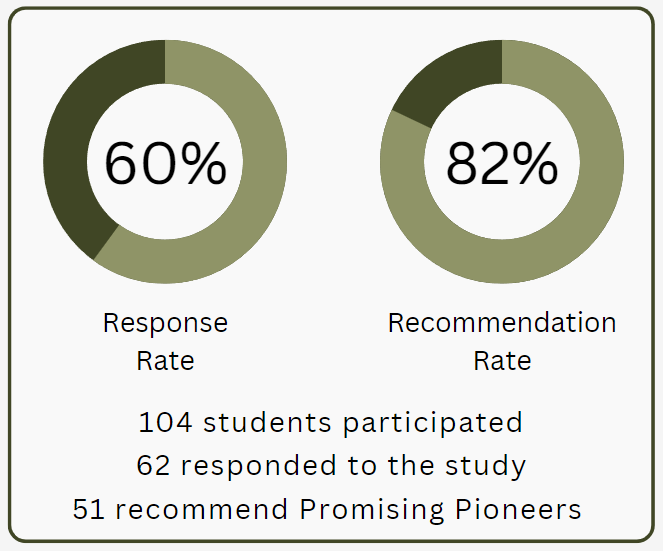
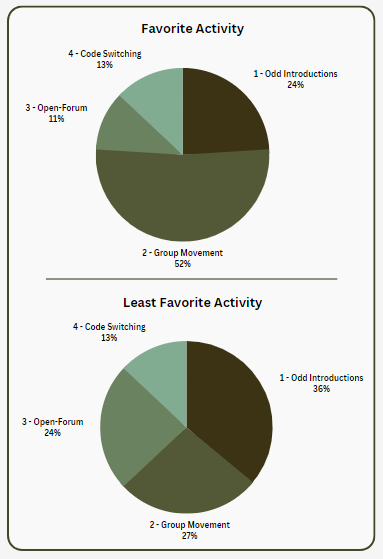
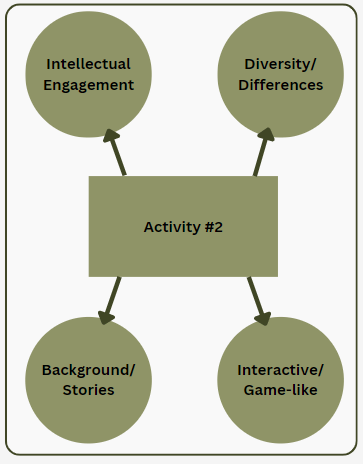
Qualitative Positive Feedback on Most Favorite Activity
“The step game was fun and taught us a valuable lesson.”
“It was fun to see how different people come from different backgrounds.”
“It was interesting seeing how different people ended up in different places.”
-Anonymous students
Qualitative Negative Feedback on Least Favorite Activity
“It was awkward.”
“It was kinda uncomfortable.”
“I don’t like introductions/icebreakers.”
“I hate talking about myself.”
– Anonymous students

Student Reports
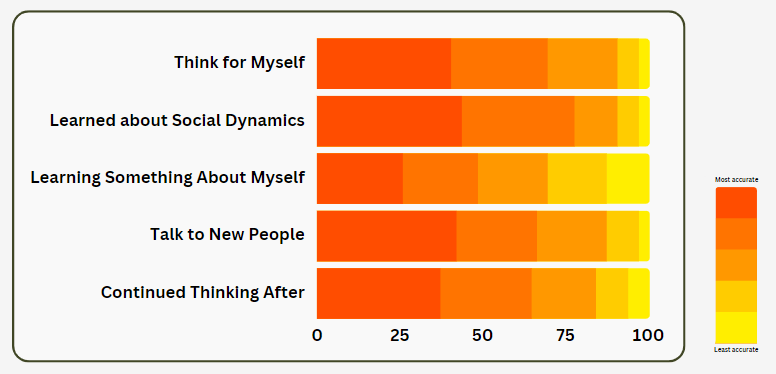
Mindfulness
“The Promising Pioneers program encouraged me to think for myself.”
“I learned something about myself I did not know during Promising Pioneers.”
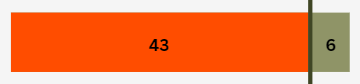
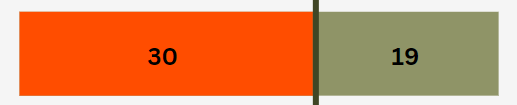
Empathy and Compassion
“Promising Pioneers taught me about social dynamics.”
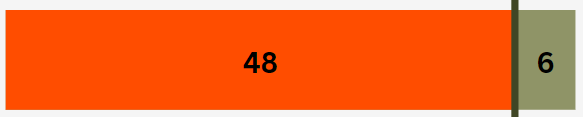
Active Listening
“I got to know people I might not have talked to at first through the Promising Pioneers groups.”

Curiosity
“The things I learned in Promising Pioneers made me continue thinking after the activity was over.”

Social and Cultural Capital
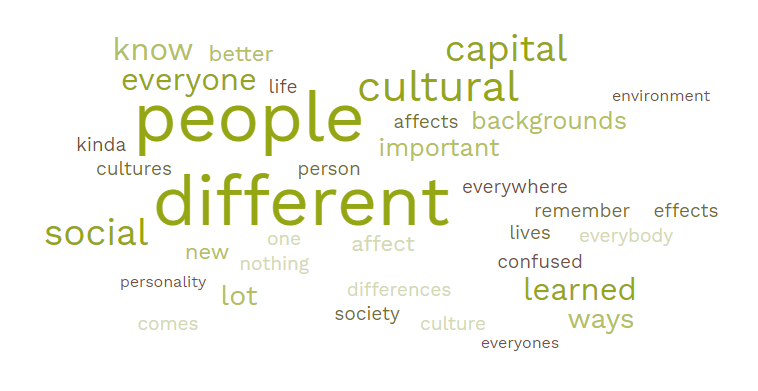
Word Cloud
A word cloud was put together of student answers to observe any themes that may appear, with a major focus falling on how we are all different and that those behaviors are largely learned.
Example Responses
“A lot of your personality comes from your environment.”
“Everyone has different social and cultural capital.”
“They are who and what you’re connected to.”
“Social and cultural capital is important to learn because it can open up doors that would otherwise have remained closed.”
“There are different ways to reach out into our communities while growing our circles.”
“Social and cultural capital are everywhere and both affect people in many different ways.”
-Anonymous students
Future Changes (Solution)
In future renditions of this project, there are a few insights we have learned that we can use to help improve next years’ activities, as well as some feedback from students.
1. Questionnaire Issues
One major mistake that occurred during this project occurred in how the questions were written (separately by two different people). While the structure of the program and the study were conducted by myself, the questions for the survey were done by another staff member during a time crunch. As such, one error that needs to be amended would be in how the questions were constructed to measure each variable. Mindfulness in this study was represented by two questions, where two variables (empathy and compassion) were measured only by one question. Further, the validity of the question for Active Listening is tenuous at best. Future surveys should be constructed at the time of creation to ensure alignment.
2. Social and Cultural Capital Separation
Qualitative analyses of the questions relating to social and cultural capital imply that students understand what the two concepts are together, but not separately. This breakdown in communication could be remedied by discussing the topics completely independently of each other instead of often paired.
3. Student Comfort
Awkwardness is a consistent variable being brought up that may be remedied by improving students’ comfort levels in the program.
4. Student Feedback
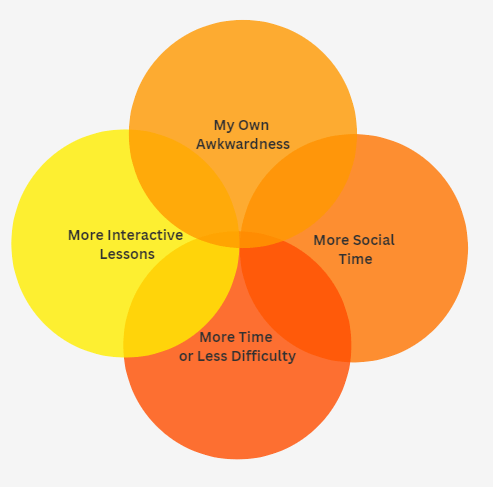
Most of the student feedback did not have suggestions. Of the little feedback that was there, four themes were repeated:
- More movement/interactivity
- More time to socialize
- More time to work or less difficult work
- Personal feelings of awkwardness
Suggested Changes
- Improve Measurement/Survey Tools
- Adjust length/depth of activities to allow more time
- Promote ways to make students feel more comfortable (highest pain point was the icebreakers activity where many students reported feeling awkward).
 Ian Frazier Ostrander, PhD